
Beyond the Diamond: Designing the Baseball Experience
With another World Series in the books and the Milwaukee Brewers celebrating their championship, baseball fans have been reminded once again of what makes America's pastime so special. The anticipation of a full count, the crack of the bat, the roar of the crowd, and the moments of silence between pitches all contribute to an experience unlike any other sport.
But there's another part of baseball that makes it special: the ballpark itself.
From historic major league stadiums to college baseball and softball facilities, the places where these games are played have a character all their own. Few sports have such a strong connection between the game, the architecture, and the traditions that surround them.
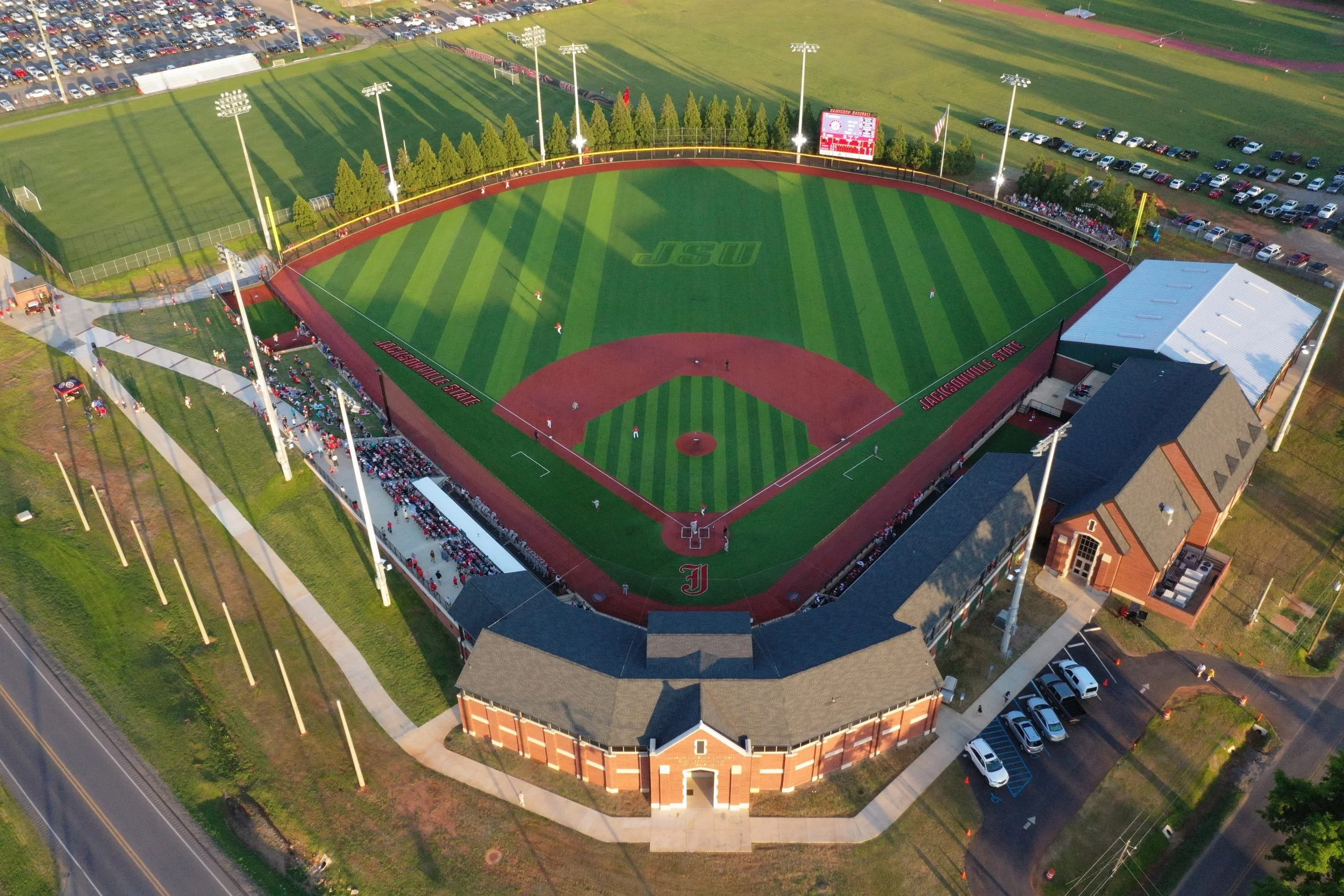
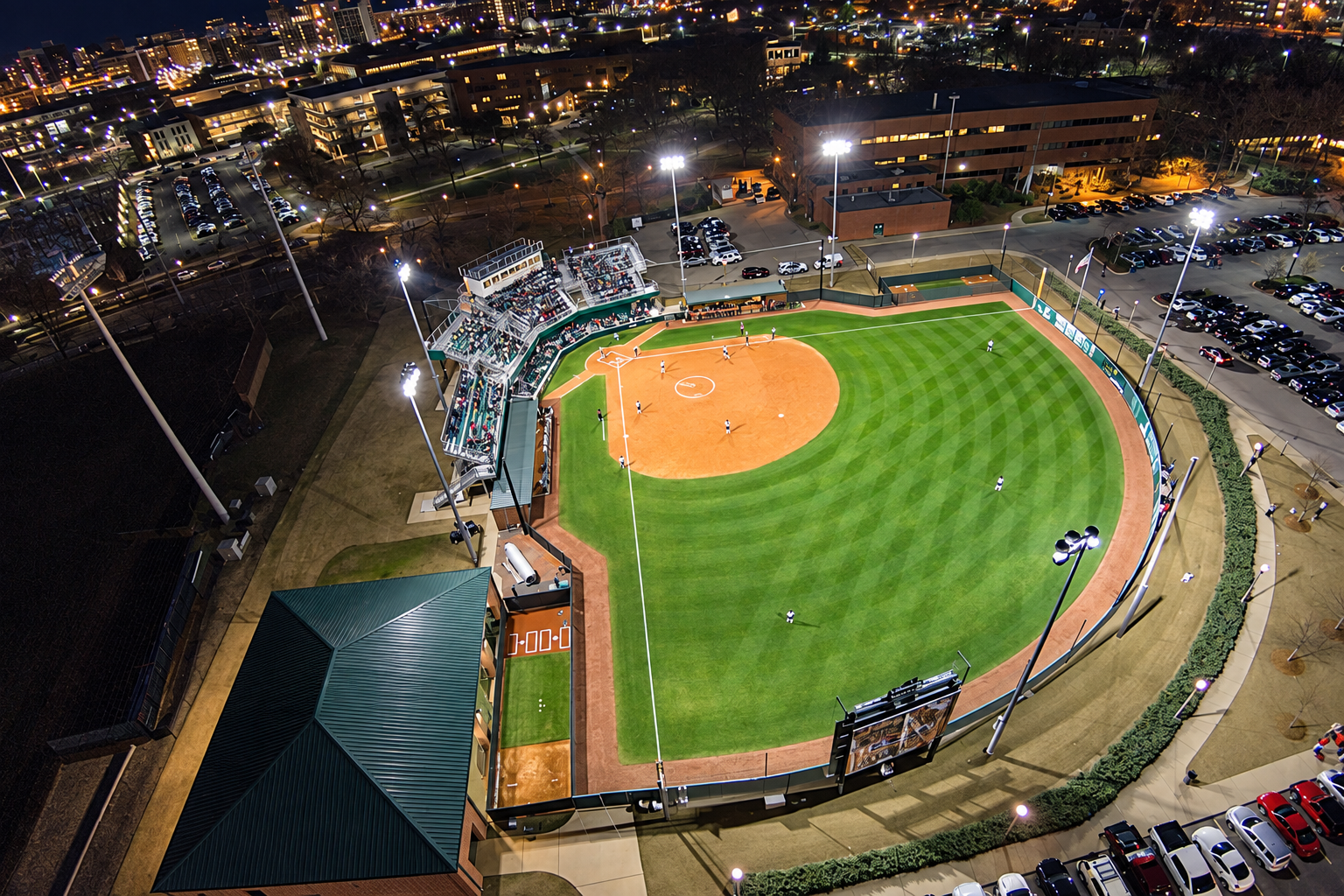
At Davis Architects, we've had the opportunity to design and renovate baseball and softball facilities for the University of Alabama, UAB, Jacksonville State University, and numerous other athletic programs. Each project presents its own challenges, but they all share a common goal: creating an environment that brings athletes, fans, and communities closer to the game.
A Different Kind of Stadium Experience
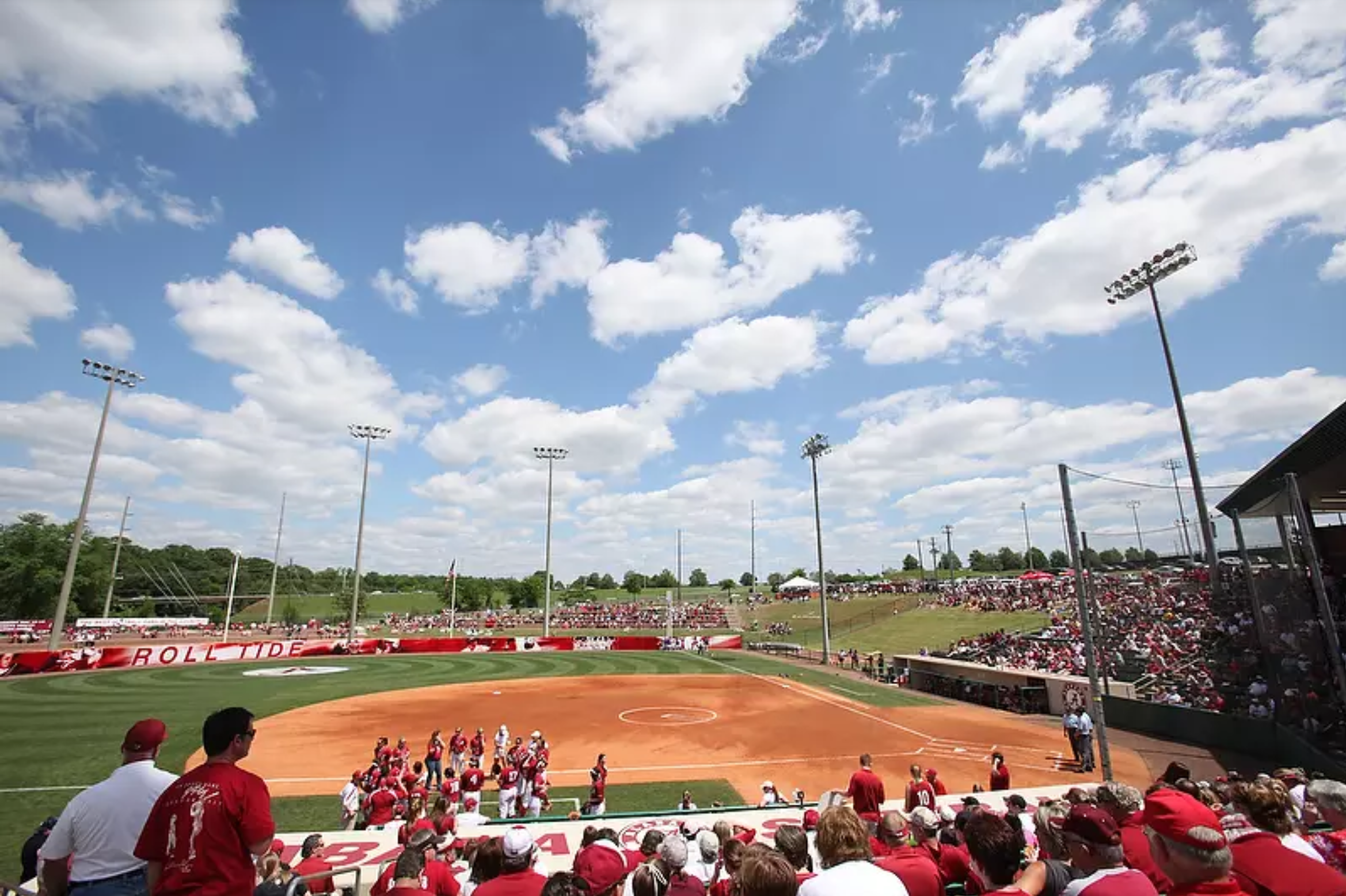
Unlike football stadiums and basketball arenas, baseball and softball venues offer a uniquely intimate spectator experience. The pace of the game encourages fans to settle in, socialize, and take in their surroundings. There is time to appreciate the view, enjoy the atmosphere, and experience the traditions that make each ballpark unique.
That experience has a significant influence on how these facilities are designed.
Sightlines, seating proximity, concourse circulation, shade, and gathering spaces all play important roles in shaping the fan experience. A great ballpark should offer more than a good seat. It should provide different ways to enjoy the game, whether that's from directly behind home plate, along the baselines, in a premium club, or from a casual gathering area overlooking the outfield.
And while every ballpark shares the familiar geometry of the diamond, no two facilities need to look or feel alike. The best designs embrace the character of their campus, program, and community.
Reimagining a Classic: Sewell-Thomas Stadium
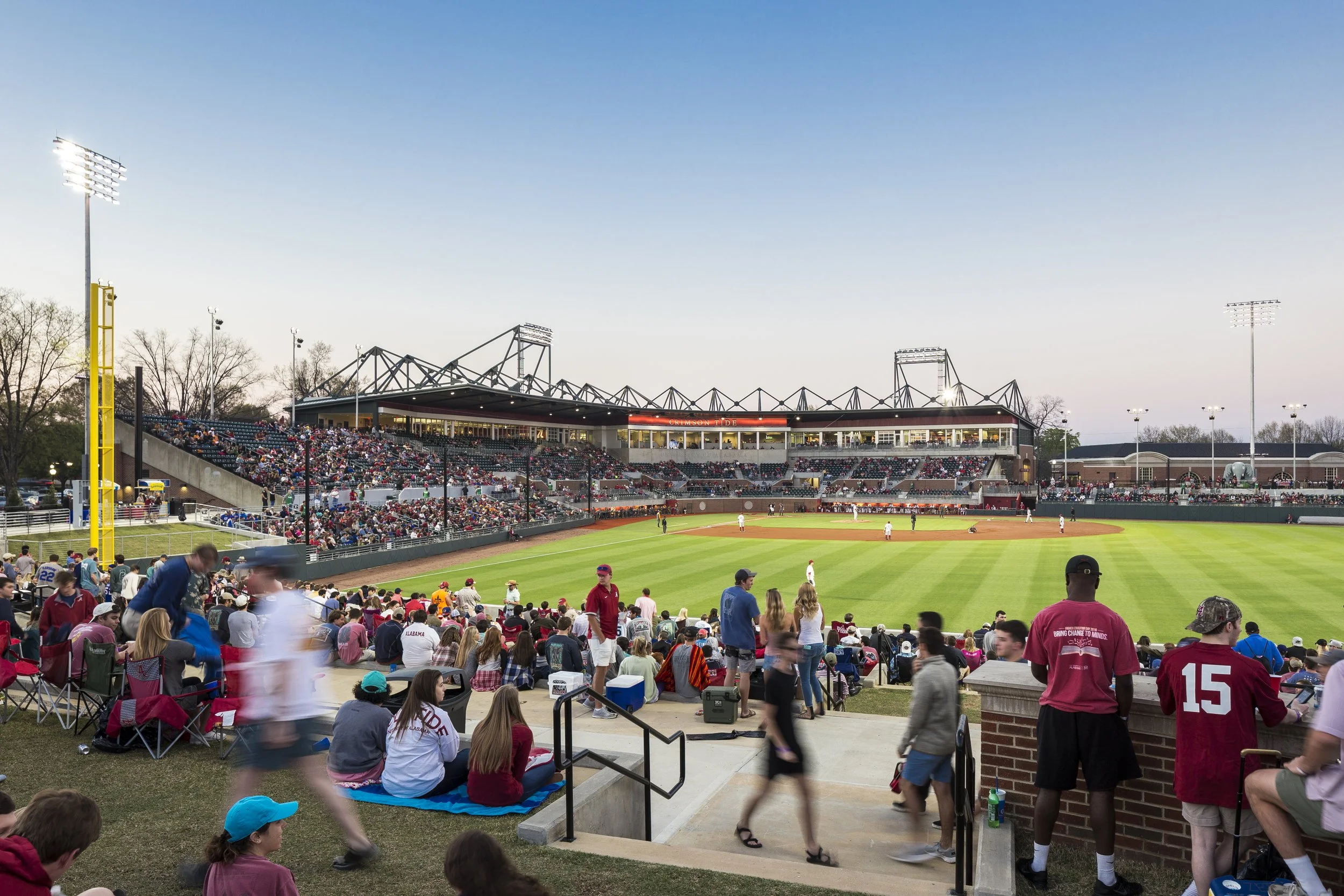
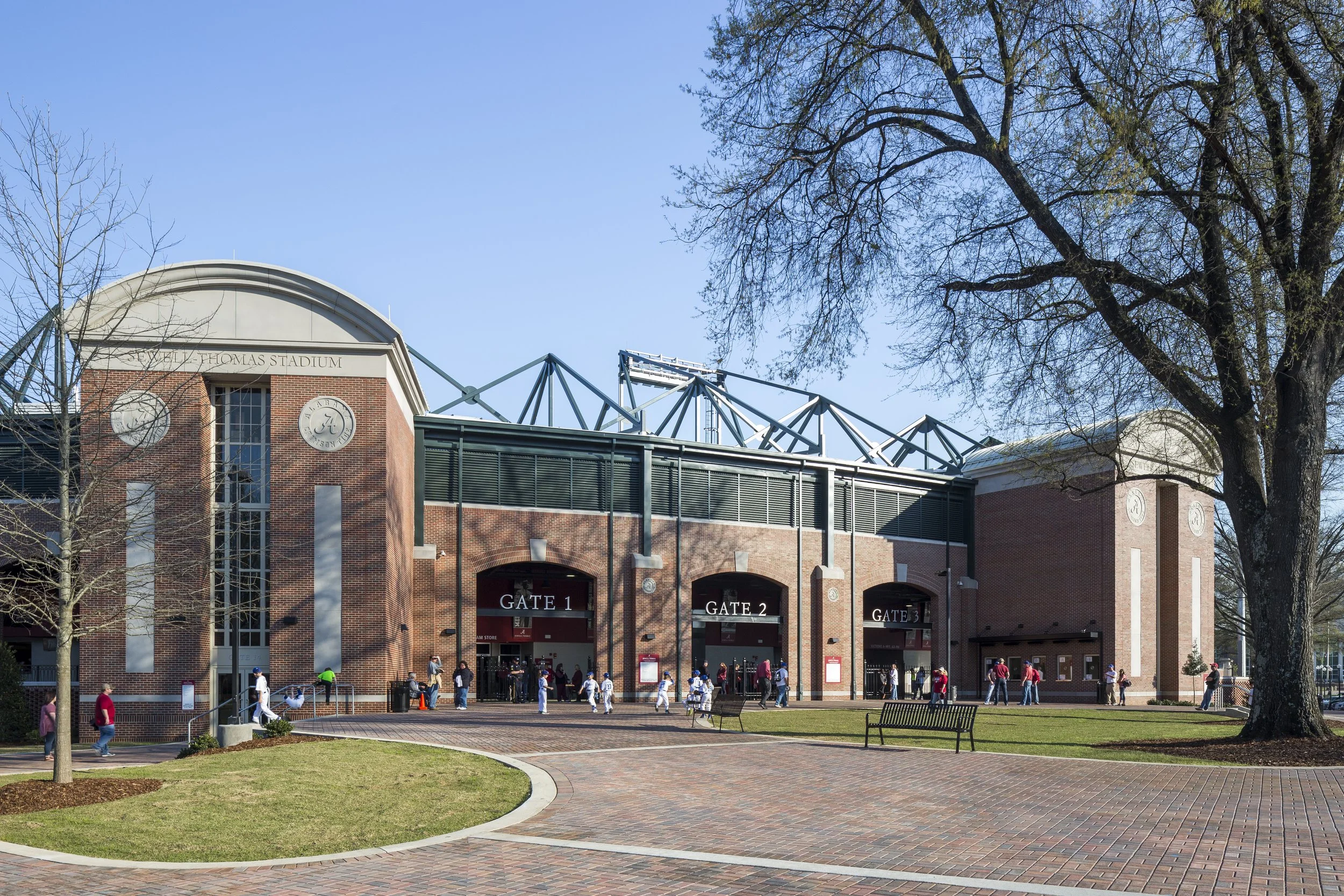
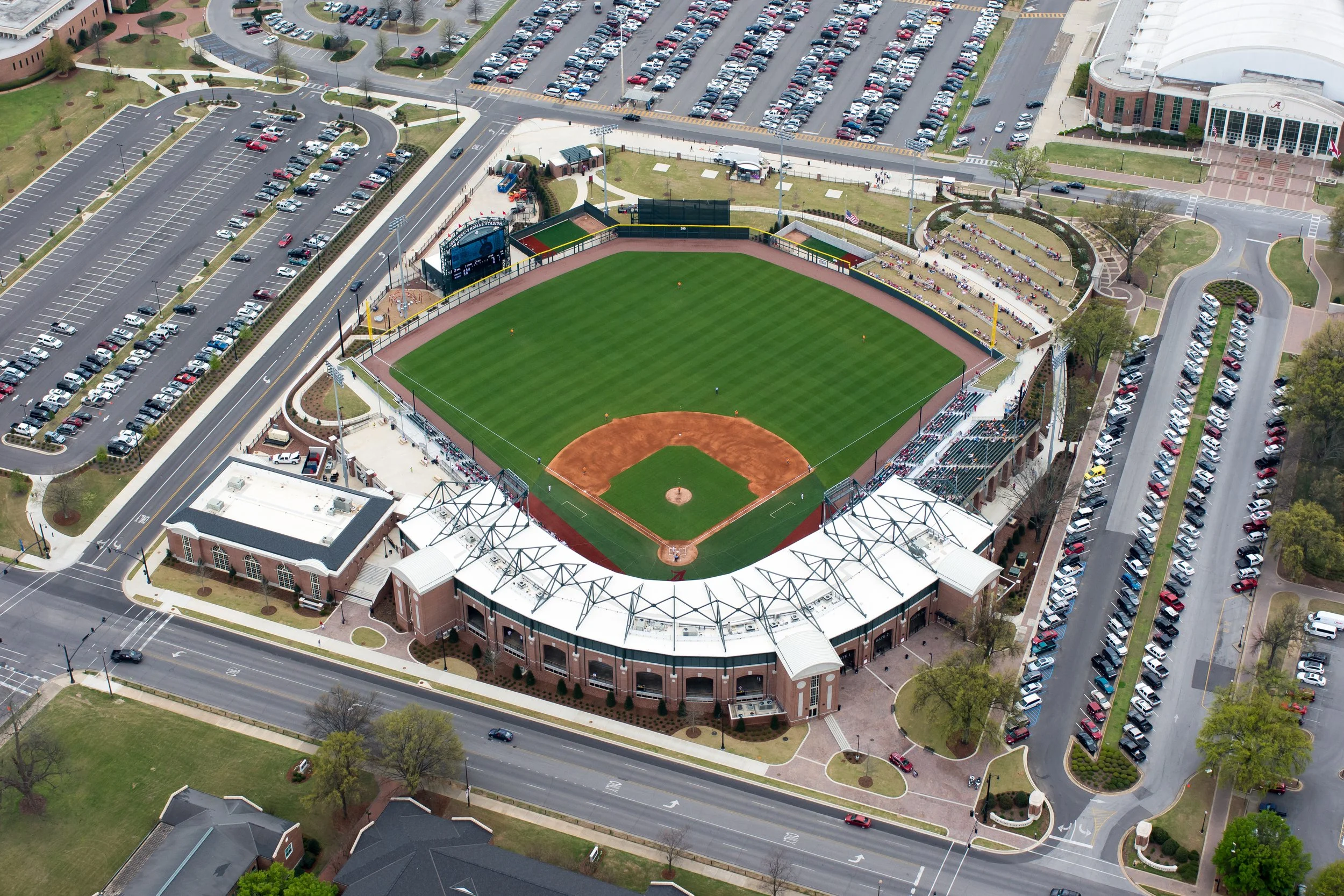
One of the most notable examples of this approach is Sewell-Thomas Stadium at the University of Alabama.
Originally constructed in 1948, the stadium had undergone decades of additions and improvements. When Davis was commissioned to renovate the facility, the challenge was to transform an aging stadium into a modern collegiate baseball destination while respecting its history.
A major priority was improving the relationship between spectators and the field. Through extensive building information modeling (BIM), our team reconfigured the seating bowl to improve sightlines throughout the stadium, including the suites and premium club areas.
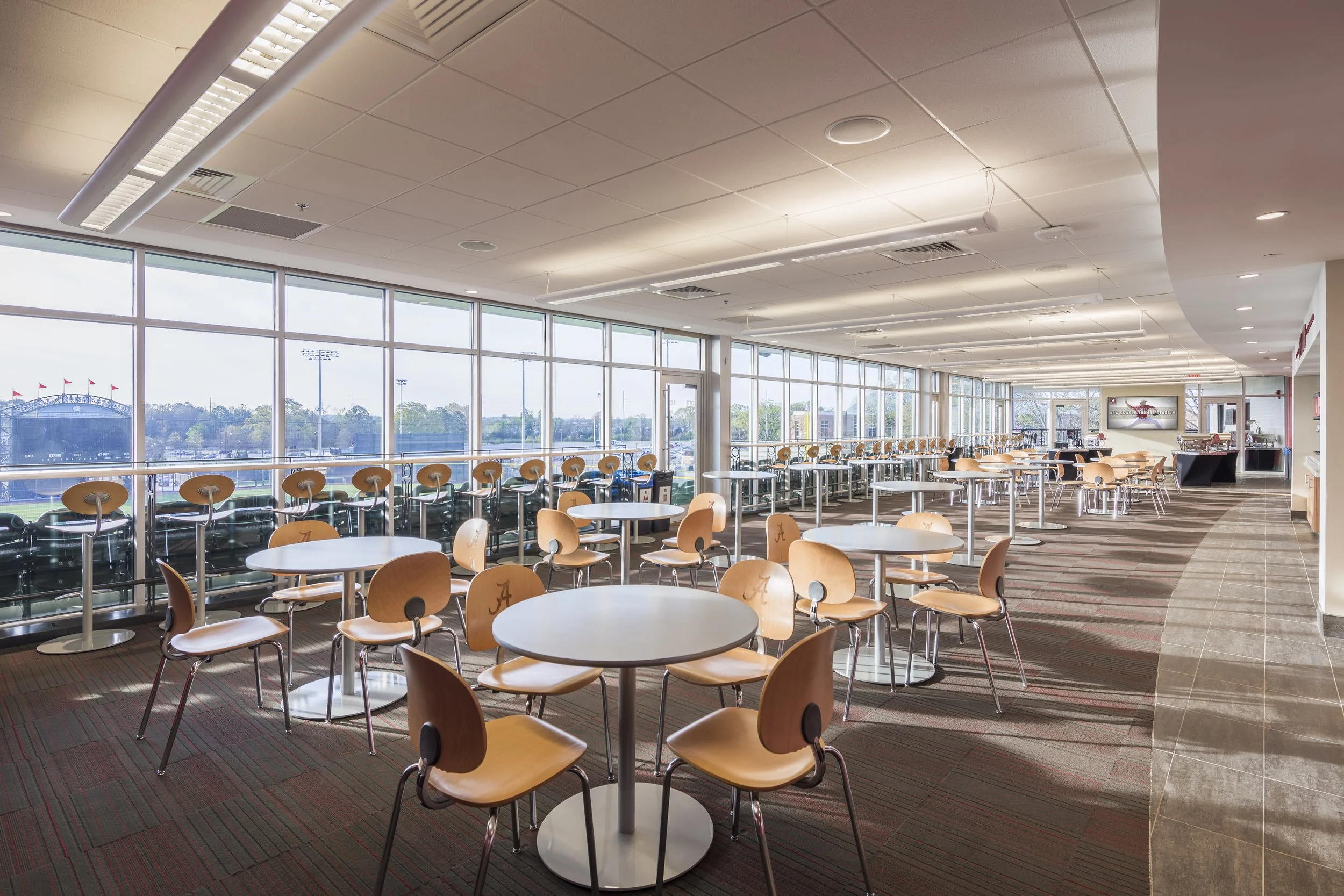
The renovation also introduced new opportunities for fans to experience the game, including expanded concourses, club lounges, suites, field-level seating, an outfield berm, and a viewing plaza along the third baseline. An outfield walkway, family areas, and gathering spaces created more opportunities for fans to move throughout the ballpark without losing their connection to the action.
Equally important were improvements behind the scenes, with new player amenities and indoor training facilities designed to support the daily demands of a competitive SEC baseball program. The result was more than a renovated stadium. It was a new game day experience built around the traditions of Alabama baseball.
Designing for the Athletes
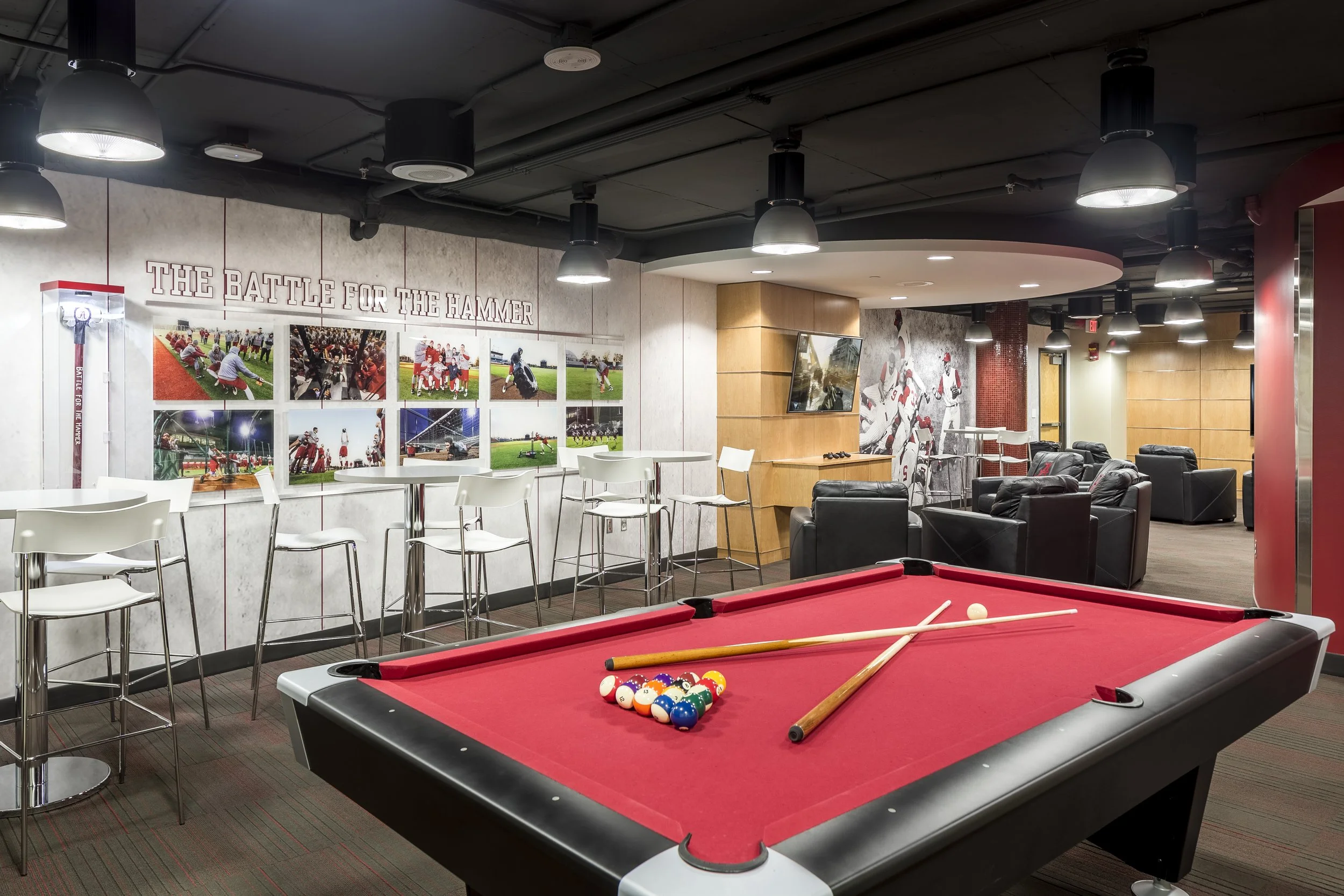
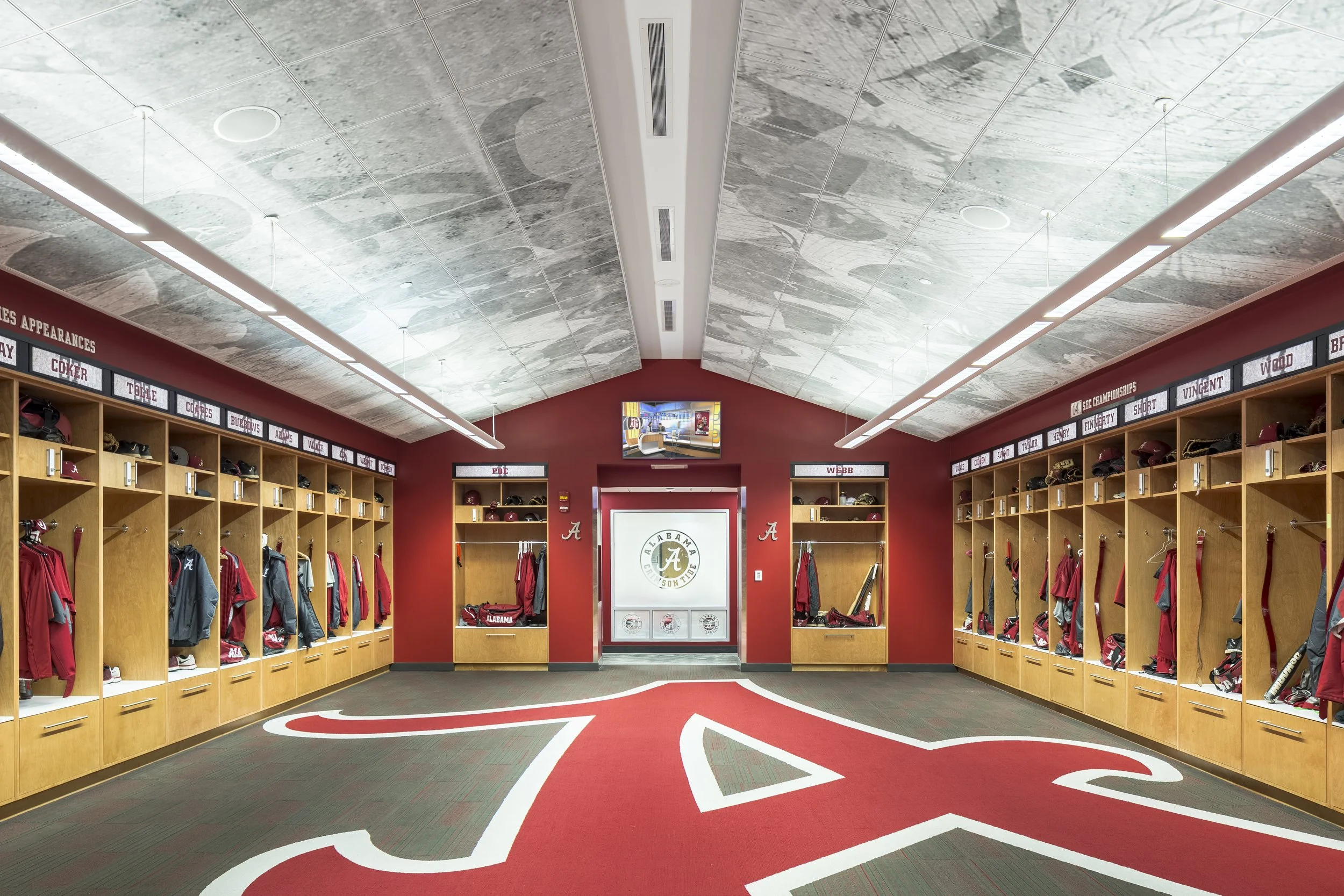
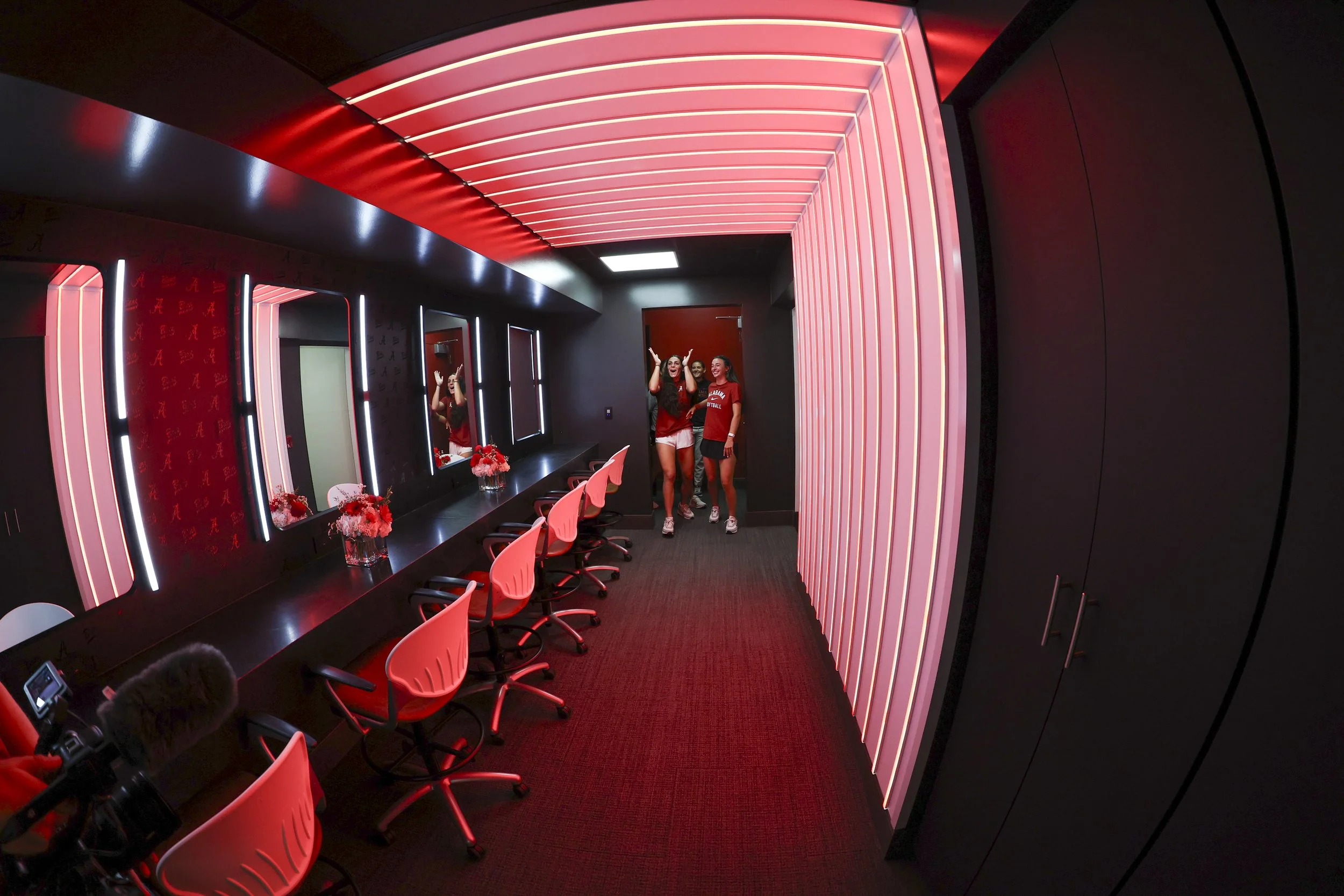
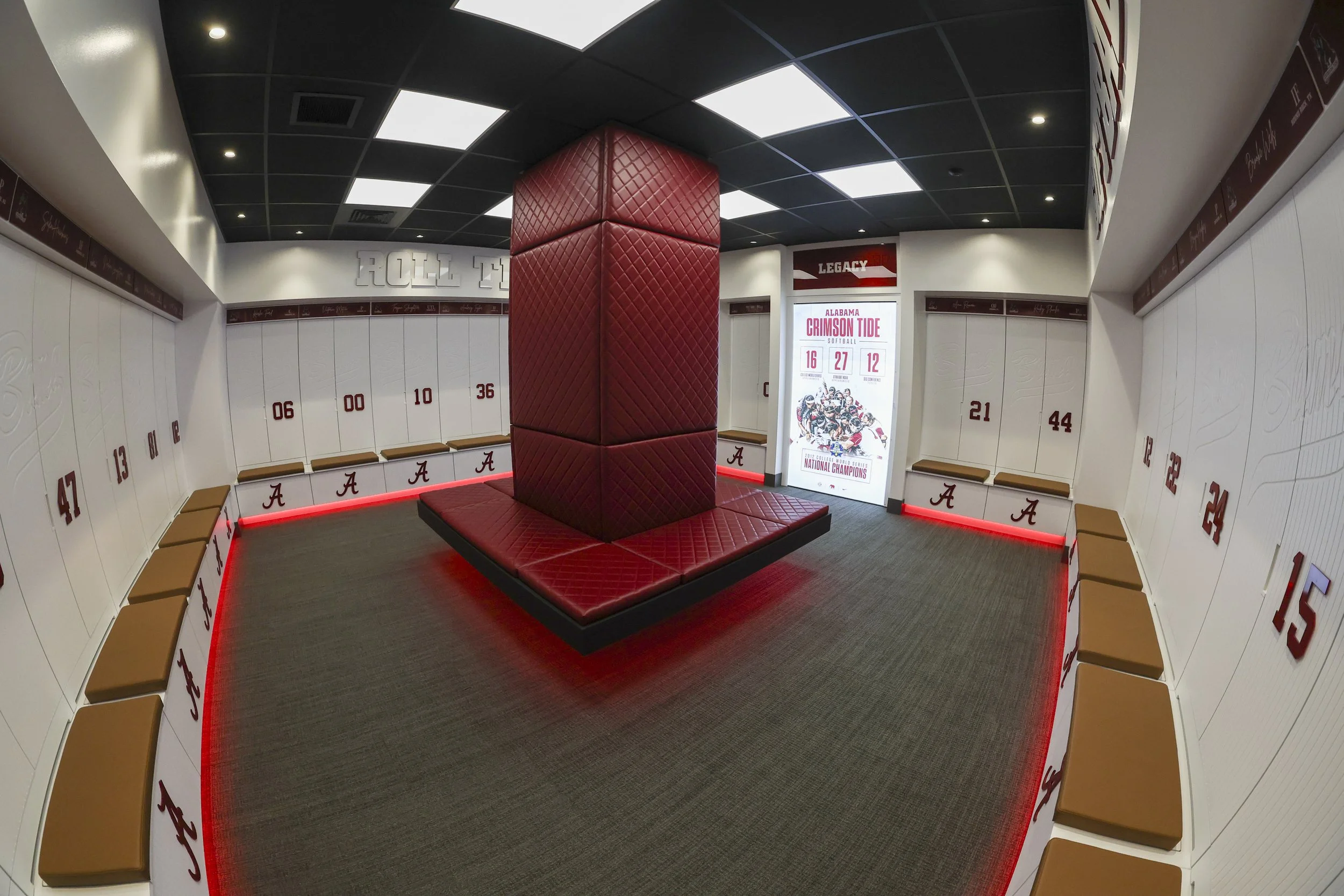
While the stands and concourses are often the most visible architectural elements, some of the most important spaces in a baseball or softball facility are the ones spectators rarely see.
Modern collegiate programs rely on much more than a field and a dugout. Locker rooms, batting cages, pitching areas, training spaces, equipment storage, team meeting rooms, and player lounges all contribute to how a program operates.
These spaces must accommodate the daily routines of student-athletes, support coaching and player development, and allow teams to train and prepare throughout the year.
At Davis, we approach these spaces with the same attention to detail as the public portions of a stadium. Whether designing facilities for Alabama baseball and softball, UAB softball, Jacksonville State baseball, or smaller high school and community programs, the goal is to create spaces that are functional, efficient, and reflective of each team's identity.
Because the quality of an athletic facility is measured by more than what happens on game day.
More Than Nine Innings
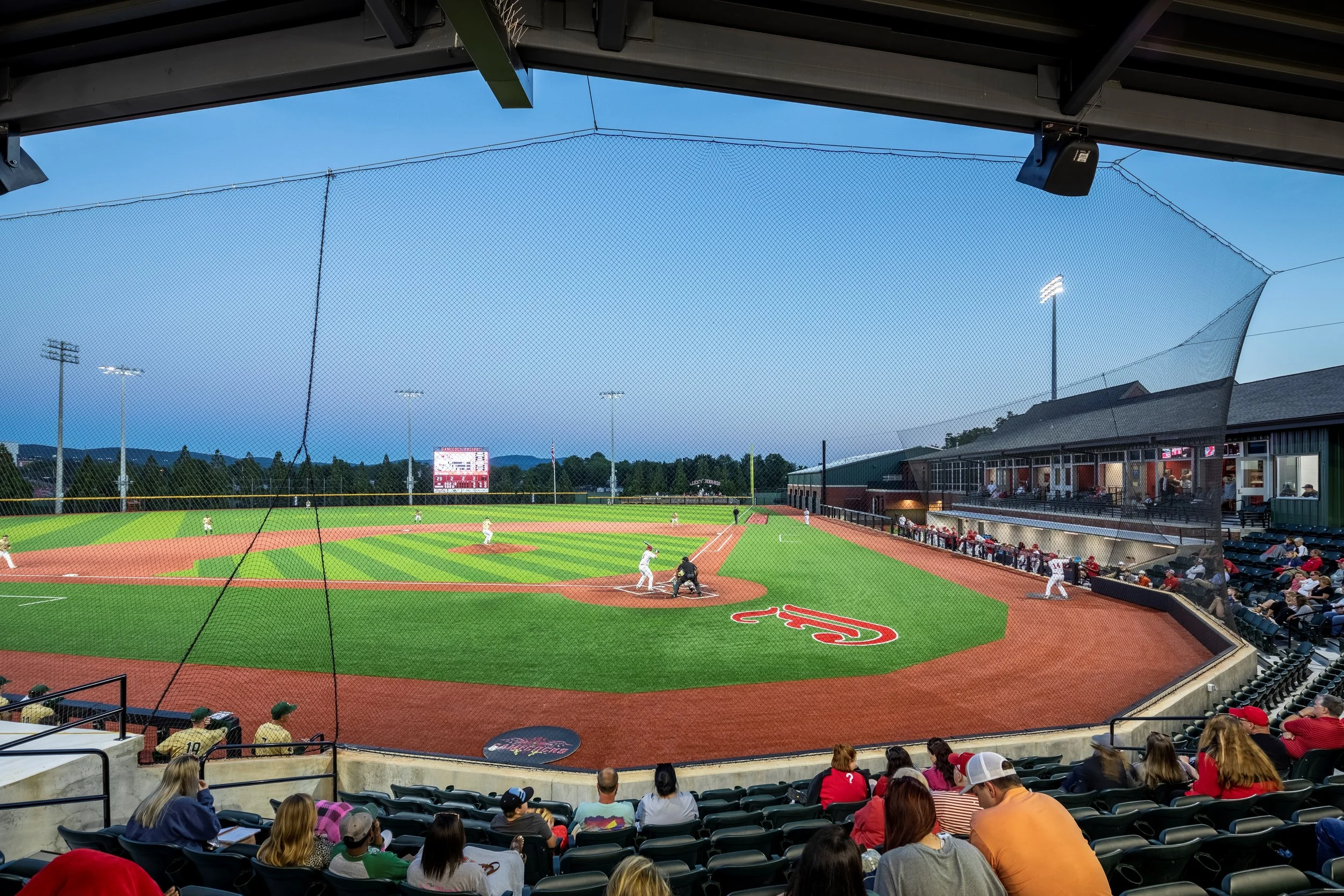
Perhaps the most rewarding aspect of designing baseball and softball facilities is understanding how much they mean to the communities they serve.
A college ballpark is a gathering place for students, alumni, families, and lifelong fans. A high school field may be where a young athlete plays their first game under the lights, where families spend spring evenings together, or where a community celebrates a championship.
The scale of those facilities may vary considerably, but their importance doesn't.
As architects, we have the opportunity to shape the setting for those experiences. Thoughtful design can bring fans closer to the field, strengthen a program's identity, improve the daily lives of its athletes, and create a place people are proud to call home.
The 2026 World Series may be over, but for college and high school programs across the country, another season is already on the horizon.
And when the first pitch is thrown next spring, we'll be reminded why these places matter.
Because a great ballpark doesn't just provide a place to play the game. It becomes part of the game itself.
Written By Andrew Taylor